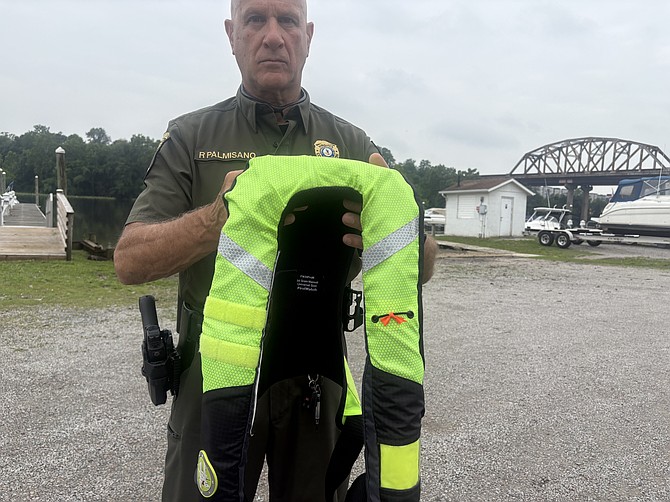
Wearing a properly fitted U.S. Coast Guard-approved life jacket can make the difference between a close call and a tragedy. Experts recommend life jackets for anyone kayaking, canoeing or boating, regardless of swimming ability.
The radio crackles before the ambulance reaches the emergency department.
A child has been pulled from the water.
Within moments, the room begins to transform. Nurses gather equipment. A respiratory therapist prepares oxygen. Blood tubes are laid out. An emergency physician reviews the information coming from paramedics: a child, water, CPR already in progress.
Everyone knows their role.
What they don’t know is whether the next few minutes will end with a child going home or a family leaving the hospital forever changed.
For Dr. Miriam Fischer, an emergency physician with MedStar Health, these are the moments she wishes families never experience.
“I wish I’d put a life jacket on them.”
“I wish I hadn’t looked away.”
“I wish I’d put up barriers.”
Those are the words she hears from parents after a drowning.
“When parents feel like they could have done something differently to prevent this, it’s very, very sad,” said Fischer who previously worked in the Emergency Department at Inova Fairfax Hospital. “You never want a parent to have that regret.”
According to the Centers for Disease Control (CDC), drowning is the leading cause of death for children ages 1 to 4, and the second leading cause of unintentional injury death for children ages 5 to 14 in the United States.
Yet Fischer says one of the greatest dangers is that many parents misunderstand what drowning looks like.
“People envision somebody flopping their arms and screaming for help,” she said. “That’s not how it usually happens.”
Instead, drowning is often silent.
“It can take under 30 seconds.”
That misconception can be deadly.
Fischer said vacations can also create a false sense of security. At backyard pools, neighborhood gatherings and family vacations, adults often assume someone else is watching.
“Vacation mode can be wonderful, but also dangerous because everybody’s trying to relax,” she said. “If parents are sitting on the beach reading a book, having a drink and not watching, that’s when we get into trouble.”
“You really need to designate a person assigned to watch each child at every moment” Fischer said.
Swimming skills can reduce risk, but they do not eliminate it.
“Kids get tired,” she said. “Even strong swimmers can drown.”
Fischer said life jackets are one of the simplest and most effective ways to prevent tragedies on the water.
“I wear one when we go boating because I don’t want to have to swim all the way ashore if we go overboard,” she said. “I also want to set an example for my kids. It is easy to get caught up in currents or not realize how far it is to swim back to shore. There’s no shame in putting on a life jacket if you’re worried. You can wear one and still have fun.”
Virginia law requires one properly fitted, U.S. Coast Guard-approved life jacket for every person aboard a boat, kayak, canoe, paddleboard or personal watercraft.
Prevention, Fischer says, is built one small decision at a time. And when a child does struggle in the water, what happens before the ambulance arrives can change everything.
“The one thing I’d want to stress about drowning is that immediate CPR makes a huge impact and really saves lives,” Fischer said.
For Arlington CPR instructor Damian Cook, one of the biggest barriers is not ability. It is fear.
“People worry they’re going to do something wrong,” Cook said. “But the worst thing you can do is nothing.”
In CPR classes, parents and caregivers practice compressions and learn how to respond during the moments when waiting is not an option.
Those skills matter because drowning is not always the end of the story.
“If you see a child struggling in the water, pull them out and start CPR,” Fischer said. “You can save their life.”
Inside the emergency department, Fischer and her team are prepared for the moments after prevention has failed.
Outside the hospital, Fischer said she hopes her work begins long before an ambulance is ever needed.
“My goal as an ER doctor is to make sure parents never have to experience this.”
“When parents feel like they could have done something differently to prevent this, it’s very, very sad. You never want a parent to have that regret.”
— Dr. Miriam Fischer, MedStar Health emergency physician
Before Your Family Gets in the Water
* Designate one adult as the water watcher
* Put phones away during water supervision
* Pack properly fitted Coast Guard approved life jackets
* Know where emergency equipment is located
* Learn CPR
* Check pool barriers and gates
* Identify whether a beach has lifeguards
Ride along with the water enforcement officers as they patrol on the Potomac this spring.