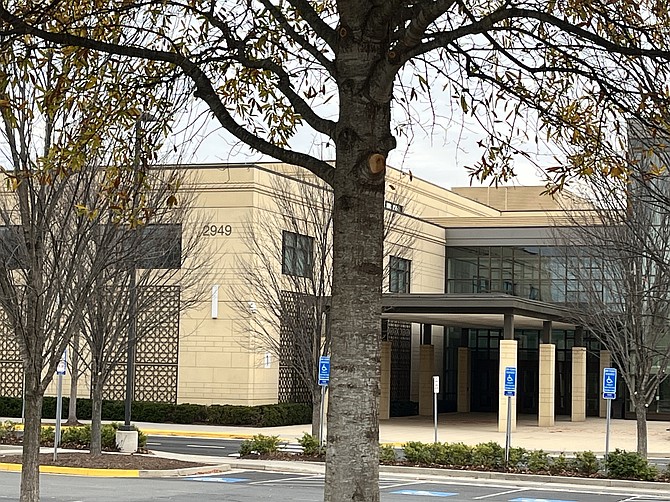
The façade of the new Western High School in Herndon, Va., seen without students and staff as of Nov. 25, 2025. Before the school can officially open to students in the 2026-2027 school year, the project must clear the § 15.2-2232 Review.
A mandatory land-use planning review process could cast a shadow over the new Western High School, the former King Abdullah Academy campus. The core issue is how Fairfax County Public Schools obtains permission to open the new facility, centered on the § 15.2-2232 Review, a state law known informally as the "2232 Process."
It is amplified by earlier controversies regarding the $150 million purchase and a perceived lack of transparency and public comment throughout the decision process. The outcome of this debate — expected in January 2026 by the Planning Commission — will determine whether the new facility opens on time for students in the fall of 2026, making this a pivotal, time-sensitive conflict for local families and planners.
Regulatory Hurdle: §15.2−2232 Review
The regulatory hurdle, §15.2−2232 Review, is the key factor. FCPS is seeking to use a legal shortcut, "Feature Shown," to bypass a full public hearing, arguing the site was already a school. The Fairfax County Planning Commission must determine if the scale of change constitutes a new proposal requiring a full public hearing. The review is not concerned with construction quality or building safety codes, but instead with the public facility's compatibility with the Comprehensive Plan, examining its general location, character, and extent.
Proponents argue the accelerated timeline is justified by need, citing the severe overcrowding in western Fairfax County high schools. "This is a gift, to be able to address that overcrowding," Rachna Sizemore Heizer, Braddock School Board representative, said at the Nov. 13 school board meeting. The acquisition is also touted as possibly saving taxpayers $280 million compared to building a new school from scratch.
The Procedural Standoff and Key Concerns
The pressure for an on-time opening led the School Board to press ahead with the 7–3–1 vote on Nov. 13, 2025, approving a phased "opt-in" enrollment plan for the 2026–2027 school year. This occurred despite School Board Member Melanie K. Meren confirming a delay in an FCPS Nov. 2, 2025, bulletin, stating the superintendent "recognized that the timeline to assign students to the first class for fall 2026 is too ambitious."
Franconia District Representative Marcia St. John-Cunning defended the push, stating the facility should not sit idle. "The community wants this. The students want this. We bought this school for a reason. We don't need it sitting there," she said.
Concerned School Board members Melanie Meren, Hunter Mill representative, and Ricardy Anderson, Mason representative, who voted against the accelerated plan, argue that the new high school is a significant change, meaning new boundaries, increased traffic, and service demands, that requires a full public review. The §15.2−2232 process would require applicants to address anticipated impacts such as transportation/trip generation, noise, environmental impacts (including tree protection), and landscaping/screening.
Traffic is a major point of contention. Mason District Representative Ricardy Anderson has previously voiced concern about school principals having to manage increased traffic loads, suggesting that a full conversion to a public high school will substantially increase vehicle trips. A full 2232 review would need to address the issue via a traffic impact analysis. The initial enrollment plan further complicates the issue; students opting into the school who live outside the eventual boundary will be responsible for their own transportation, potentially adding to the volume of private vehicles.
Anderson also criticized the rush at the Nov. 13 meeting, raising questions about the school's core nature (its "character and extent"). "We haven't even identified what that special programming piece will be. ... What are we going to present to the community?” The Board had indicated the school will be a comprehensive high school with a special programming pathway.
Virginia Code §15.2−2232 requires all “new public facilities” to be found in "substantial accord" with the local Comprehensive Plan. The core procedural challenge, Meren noted, is timing: "A key factor is completing the '2232 Process,' in a best-case scenario of five months. This is not enough time to then complete necessary structural adjustments to the facility by the fall."
FCPS Seeks Administrative Approval
How will FCPS attempt to comply with the §15.2−2232 requirement? By seeking approval of the project as a "Feature Shown," in the Comprehensive Plan, FCPS aims to obtain administrative approval from the Fairfax County Planning Commission. This method would skip a full public hearing, potentially avoiding months of delays, and minimizing additional costs.
The Fairfax County Planning Commission's decision is reportedly expected around January 2026, next month. If the Commission grants FCPS administrative approval without a public hearing, the school will have cleared the most significant regulatory hurdle required for its opening, establishing a key precedent for future disputes over the scale and character of public facilities in Fairfax County.
If the Commission were to deny the administrative shortcut, FCPS would be required to pursue a full public hearing. This scenario could add months to the review process and could make the planned Fall 2026 opening date nearly impossible.